Skincare packaging uses dates and symbols to show how long a product is intended to last. The label can look cryptic because rules differ by market. This guide explains the Period After Opening (PAO) symbol, best-before dates, the hourglass mark, batch codes, and the 30-month labelling rule. It focuses on what the package says, not on product performance.
Quick Answer: Expiration Dates vs PAO Symbols
Two marks are useful to recognise: a printed date of minimum durability, which may use an hourglass, and the open-jar period-after-opening (PAO) symbol. In the EU, Article 19 distinguishes products with durability up to 30 months from those lasting more than 30 months; for the latter, PAO information normally applies, with exceptions where after-opening durability is irrelevant. A minimum durability date concerns the product under appropriate storage conditions, not a date that restarts on opening. See EU Cosmetics Regulation, Article 19.
U.S. cosmetic labels do not generally require expiration dating, although manufacturers are responsible for safety. Sunscreens are regulated as drugs. FDA explains that a sunscreen may omit an expiration date if stability testing shows it remains stable for at least three years; if no date is printed, FDA advises discarding it three years after purchase. See FDA cosmetic shelf-life guidance and FDA sunscreen guidance.
How to Read Expiration Dates and PAO Symbols: Step by Step
Step 1: Locate the Symbols
Have the package in hand and inspect the container and carton for an open-jar symbol, hourglass, or printed date. Check any location referenced by the label. Do not confuse a manufacturing batch identifier with a date.
Step 2: Read the PAO Symbol
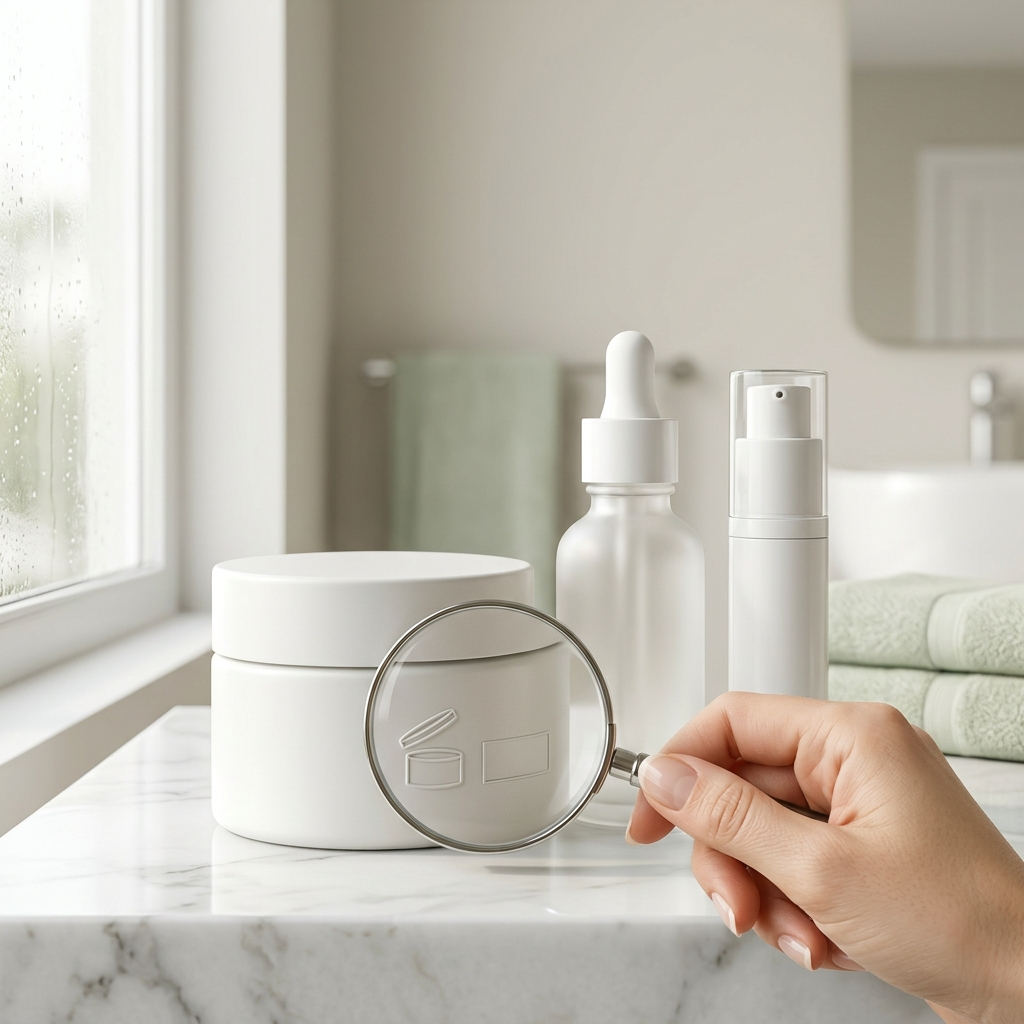
The PAO symbol is an open jar with a number and “M.” The “M” stands for months. For example, “12M” means 12 months after opening. The number is the manufacturer’s period after opening for that product (EU Cosmetics Regulation, Article 19). In the EU, products with minimum durability exceeding 30 months normally show a PAO; exceptions apply when durability after opening is not relevant (MDPI: Designing a Suitable Stability Protocol).
Step 3: Check for a Best-Before Date or Hourglass
If there is no open-jar symbol, look for a printed date. It may read “Best before end” followed by a month and year, or it may appear beside an hourglass icon. The hourglass is a language-neutral mark for the date of minimum durability (EU Cosmetics Regulation, Article 19). For products with a minimum durability of 30 months or less, this date is the minimum durability date under appropriate storage conditions (MDPI: Labeling of Cosmetic Products).
Step 4: Record the Month and Year You First Open the Product
The PAO clock starts when you first open the product, not when you buy it. A peer-reviewed review of cosmetics expiry notes that chemical changes and contamination generally occur after opening and recommends that consumers record the first day of use along with the product’s PAO (PMC: Why ignore expiry dates on cosmetics?). Write the month and year on the bottle or cap with a marker. That record turns the PAO number into a practical deadline.
Step 5: Use the Batch Code Only for Tracing
A batch code is a mix of letters and numbers, often printed under the barcode. It identifies a manufacturing batch. The Inkey List notes that a batch code is mainly a manufacturing identifier, useful if a product needs to be traced (The Inkey List: How to Read an INCI List). It is not a substitute for a PAO or best-before date. If you know when you opened the product, your own written date is the more useful record.
PAO Symbol Explained: What 6M, 12M, 24M, and 36M Mean
The open-jar symbol indicates a period after opening, expressed in months or years under EU labelling rules. A label showing 6M refers to six months after opening; 24M refers to 24 months. Record the opening date so you can follow the period stated on your particular package. See EU Cosmetics Regulation, Article 19 and Annex VII.
PAO values are not interchangeable across product types. A number printed on one product does not tell you the correct number for another. Common PAO numbers on packaging include 6M, 12M, 24M, and 36M, but the number that matters is the one printed on your product (Cosmetify: Does Skincare Expire?). Read the symbol on each package and follow that package’s number.
Products That May Not Show a PAO Symbol
The EU rule has exceptions where durability after opening is irrelevant. Recital 48 gives examples of single-use products, products not at risk of deterioration, and products that do not open. A missing PAO symbol is not a reason to invent a universal use period. Check the product instructions or ask the manufacturer. See EU Cosmetics Regulation, recital 48 and Article 19.
What If the Date Markings Are Unclear?
A date of minimum durability describes how long a properly stored product continues to fulfil its function and safety requirements. A PAO refers to the period after opening. If the markings are unclear or appear to conflict, ask the manufacturer about that specific package rather than assume one marking resets another. See EU Cosmetics Regulation, Article 19.
Best-Before Dates and the Hourglass Symbol
A best-before date marks the date of minimum durability. It is usually written as a month and year and may be introduced by words such as “Best before end” or accompanied by an hourglass. A date written as “Best before end: 04/2025” means the product is best used before the end of April 2025 (EU Cosmetics Regulation, Article 19). In the EU, this date is used for products with a minimum durability of 30 months or less (MDPI: Labeling of Cosmetic Products). Once the date has passed, the product is outside the manufacturer’s stated minimum durability window.
Check both the carton and the container before discarding packaging: the date or opening symbol may be easier to find on one of them.
US and EU Labelling Differences
The EU use the 30-month rule. A product with a minimum durability of 30 months or less carries a best-before date. A product with a minimum durability over 30 months carries the PAO instead (MDPI: Designing a Suitable Stability Protocol). This is why the same formula can show different marks in different markets.
Requirements vary by market. Check the label and manufacturer instructions for the product you actually purchased. This guide does not establish the rules for every country.
When to Replace a Product
Dates and PAO symbols are the main shelf-life markers. A peer-reviewed review reports that using cosmetics beyond their expiry date can be a health risk because quality and safety can deteriorate, particularly after opening. The same review states that expired cosmetics can harbor high levels of microbiological contamination that pose a health hazard (PMC: Why ignore expiry dates on cosmetics?).
If the markings are unclear, ask the manufacturer to explain that particular package. Follow the labelled storage instructions and do not treat opening as a way to extend a printed date.
Simple Habits for Tracking Skincare Shelf Life
- Write the month and year on the package the day you first open it. A medical review recommends recording the first day of use with the PAO (PMC: Why ignore expiry dates on cosmetics?).
- Check the open jar, hourglass, and printed dates when you first unbox a product.
- Keep a simple list or phone note for products with long PAO windows, such as 12M or 24M.
- Follow any storage directions printed on the label.
- Replace products once the best-before date or PAO period has passed.
Evidence Notes and Limits
This guide uses U.S. FDA pages for U.S. rules, peer-reviewed labelling and stability research for the 30-month EU framework, and packaging guides for symbol descriptions. It does not evaluate any specific brand’s product or claim that a product remains safe beyond its labelled date or PAO. Labelling requirements can change, and product-specific directions on the package take priority.
FAQ
What does “12M” mean? It means 12 months after opening. The open-jar symbol shows the period after opening for that product.
Does the PAO clock start when I buy the product? No. It starts when you first open the product, because chemical changes and contamination generally occur after opening (PMC: Why ignore expiry dates on cosmetics?).
Why does my product have no date? In the United States, cosmetics are not required to carry a shelf-life date. Some products carry one only because they are also regulated as drugs, such as sunscreens with SPF (FDA: Shelf Life and Expiration Dating of Cosmetics).
My product shows different date markings. Which do I follow? Ask the manufacturer to identify what each marking refers to before relying on it. A batch code is not automatically an expiration date.
Can I use a product after its PAO? The PAO is the product’s after-opening shelf-life limit. A peer-reviewed review links use beyond expiry to quality and safety deterioration and possible microbiological contamination (PMC: Why ignore expiry dates on cosmetics?). Replace it.
Conclusion
Reading skincare packaging comes down to a few marks. Look for the open-jar PAO symbol and read the number plus “M” as months after opening. Look for a best-before date or hourglass for minimum durability under appropriate storage conditions. Remember the EU 30-month split, and remember that U.S. cosmetic rules differ. Write the open date on the package, check the label when in doubt, and replace products once their labelled date or PAO has passed.