
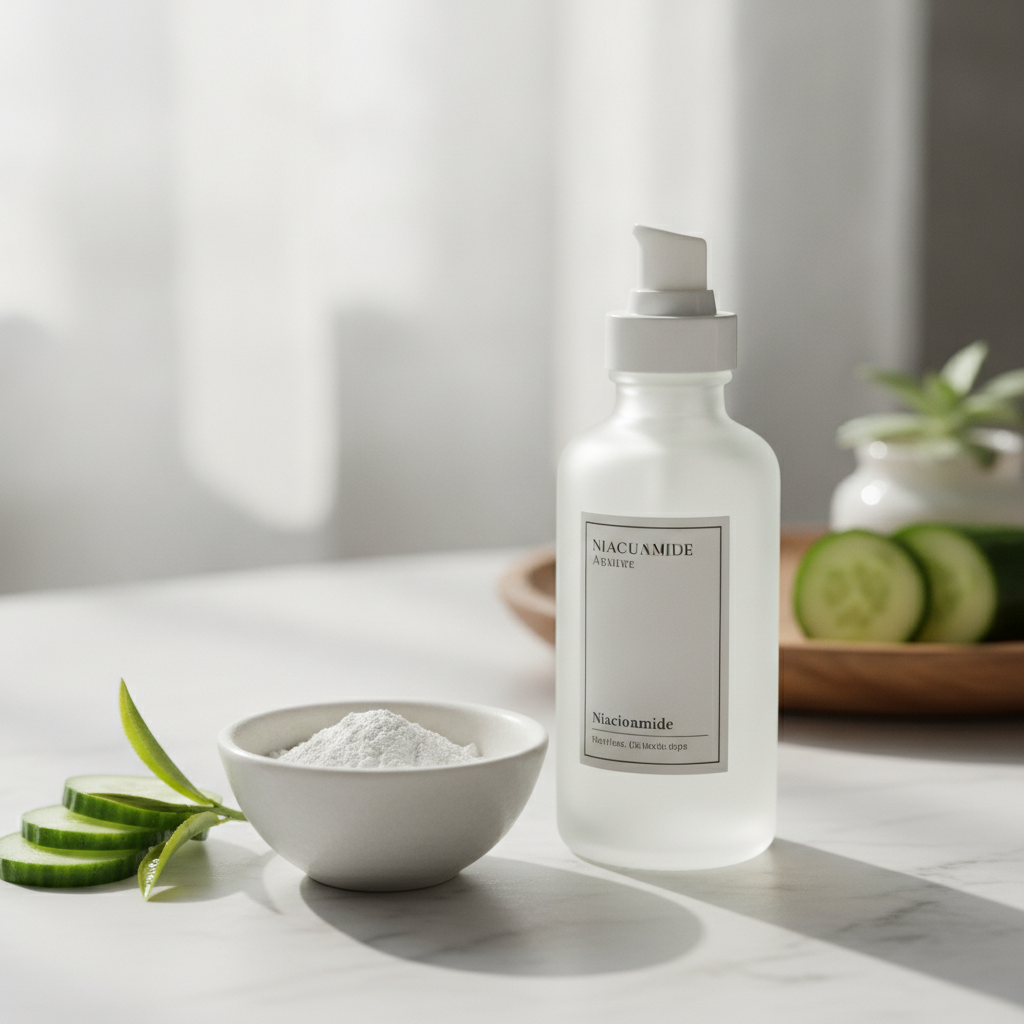

If you have sensitive skin, every new product feels like a gamble — will it soothe or sting? That’s why niacinamide has become a quiet hero: it delivers real results without the drama. Whether you’re dealing with redness, uneven texture, or just want to try active ingredients without the burn, niacinamide might be your new best friend. Here’s everything a sensitive-skin beginner needs to know.
What Is Niacinamide?
Niacinamide is a form of vitamin B3 — an essential nutrient your body already recognizes. Applied topically, it strengthens the skin barrier, calms inflammation, and regulates oil production. Unlike harsher actives like retinol and glycolic acid, niacinamide is remarkably well-tolerated — even by skin that flushes at the mention of “exfoliant.” It’s water-soluble, non-acidic, and plays nicely with most other ingredients.
Why Niacinamide Works for Sensitive Skin
Sensitive skin often has a compromised barrier — like a brick wall with missing mortar. Niacinamide boosts ceramide production, the lipids that act as that mortar. A stronger barrier means less water loss, fewer irritants getting in, and less reactivity overall.
It’s also anti-inflammatory, so it actively calms redness and blotchiness. For those whose sensitivity comes with breakouts, niacinamide’s ability to regulate sebum makes it a rare find — it helps acne-prone skin while staying gentle enough for rosacea-prone skin.
Niacinamide Benefits at a Glance
| Benefit | What It Does | Why Sensitive Skin Loves It |
|---|---|---|
| Strengthens Skin Barrier | Boosts ceramide and protein production | Less reactivity, fewer flare-ups |
| Reduces Redness & Inflammation | Anti-inflammatory action calms skin | Soothes rosacea and general sensitivity |
| Regulates Oil Production | Balances sebum without over-drying | Helps acne without irritation |
| Minimizes Pores | Improves elasticity around pore walls | Smoother texture, no harsh astringents |
| Fades Hyperpigmentation | Slows melanin transfer to skin cells | Gentler brightening than vitamin C or acids |
| Protects Against Environmental Damage | Fights free radicals, supports DNA repair | Defends without sensitizing |
How to Start: Low and Slow Wins the Race
Here’s the most important rule: start with a lower concentration and work your way up. Most niacinamide serums fall between 2% and 10%. Clinical studies show benefits as low as 2%, so there’s zero pressure to jump straight to the strong stuff.
Start With 2%–5%
If your skin has never met niacinamide — or is especially reactive — begin with a product in the 2–5% range. This gives your skin time to adjust. Many moisturizers and gentle serums fall into this sweet spot, making them perfect entry points.
Graduate to 10% (If Your Skin Agrees)
Once you’ve used a lower concentration without stinging, redness, or breakouts for two to four weeks, you can try moving up. A 10% formula delivers more dramatic results for pore size and oil control — but if 2–5% is working, you can happily stay there forever.
Two Beginner-Friendly Serums
The Ordinary Niacinamide 10% + Zinc 1% — Affordable, widely available, and potent with added zinc for oil control. Patch test first and consider applying over moisturizer to buffer the adjustment.
Good Molecules Niacinamide Serum — Also 10% but with a simpler ingredient list that skips the zinc (which some find drying). It focuses purely on hydration and barrier support, making it a gentler on-ramp for reactive skin.
Disclosure: We may earn a commission at no extra cost to you. We only recommend products we genuinely believe in.
The Dos and Don’ts
✅ The Dos
- Do patch test. Apply a small amount behind your ear or on your inner arm. Wait 24 hours before committing to your face.
- Do apply to damp skin. Niacinamide absorbs best when your skin is slightly damp — freshly cleansed and patted dry.
- Do use it twice daily if tolerated. Gentle enough for morning and night. In the morning, layer under sunscreen.
- Do pair it with barrier-friendly ingredients. Ceramides, peptides, hyaluronic acid, and squalane are all great teammates.
- Do wear sunscreen. Niacinamide isn’t photosensitizing, but sunscreen is non-negotiable — especially if you’re treating hyperpigmentation.
- Do listen to your skin. If something stings or causes redness, pause and reassess. Sensitive skin is a great communicator.
❌ The Don’ts
- Don’t layer it with strong acids. Using niacinamide alongside high-strength AHAs, BHAs, or pure vitamin C can cause flushing. Alternate them AM/PM or on different days.
- Don’t assume higher percentage means better. For many with sensitive skin, 2–5% is the sweet spot. Don’t chase higher concentrations.
- Don’t introduce multiple new products at once. One new product at a time, with at least a week between introductions, so you know what’s helping and what’s not.
- Don’t skip moisturizer. Niacinamide supports the barrier but it’s not a substitute. Lock everything in with a moisturizer your skin trusts.
- Don’t ignore the full ingredient list. A formula loaded with fragrance, alcohol, or essential oils will do more harm than good. The supporting cast matters as much as the star.
- Don’t give up after one bad experience. If one product stings, it might be the formula — not niacinamide. Try a different brand at a lower concentration.
Building It Into Your Routine
A simple, sensitive-skin-safe routine:
Morning: Gentle cleanser → Niacinamide serum (on damp skin) → Moisturizer → Sunscreen (SPF 30+)
Evening: Gentle cleanser → Niacinamide serum → Moisturizer
Give it three to four weeks and pay attention to how your skin feels. The best routine is the one you’ll stick with — and one that doesn’t make your skin angry.
When to Expect Results
- Week 1–2: Skin feels more hydrated and less tight. Redness may start calming.
- Week 3–6: Oil production balances out. Pores look subtly smaller and texture feels smoother.
- Week 8–12: Hyperpigmentation and post-acne marks begin fading — this is when the real transformation shows.
Niacinamide isn’t a flashy overnight fix — it’s a steady workhorse. For sensitive skin, that slow-and-steady approach is exactly what you want.
Note: This is not medical advice. If you have a diagnosed skin condition, persistent irritation, or are unsure whether niacinamide is right for you, consult a dermatologist. A professional who can see and touch your skin will always give the best guidance.