
Hyaluronic acid serum is one of the best tools for hydrated, plump skin. But many people use it wrong. The secret is damp skin. This guide will teach you how to apply hyaluronic acid serum on damp skin correctly. You will learn why water matters, how to layer products, and what mistakes to avoid. By the end, you will have a routine that gives you soft, glowing skin every day.
Why Damp Skin Is Critical for Hyaluronic Acid Serum Application
Water is the key to making hyaluronic acid serum work. Without it, the serum cannot do its job. Let us look at the science behind this.
The Science Behind Hyaluronic Acid Serum and Moisture
Hyaluronic acid is a humectant. A humectant pulls water from the air and from deeper layers of your skin. One gram of hyaluronic acid can hold up to six liters of water. That is a lot of power. When you apply hyaluronic acid serum on damp skin, the serum grabs that surface water and pulls it into your skin. Your skin looks fuller and feels softer right away. The water on your skin gives the serum something to work with. Think of it as fuel for the hydration engine.
What Happens When You Apply Hyaluronic Acid Serum to Dry Skin
Dry skin has no surface water. When you put hyaluronic acid serum on dry skin, the serum looks for water somewhere else. It pulls moisture from deep inside your skin. That water moves up to the surface and evaporates. Your skin ends up feeling tight and dry. You might see flaking or feel discomfort. The product that should hydrate you actually makes things worse. This is why you must always apply hyaluronic acid serum on damp skin.
How the Sponge Analogy Explains Correct Damp Skin Application
Picture a dry sponge. If you pour soap on a dry sponge, it sits on top and does nothing useful. Now picture a damp sponge. Pour the same soap, and it spreads easily and cleans deep. Your skin works the same way. Damp skin is like that wet sponge. It is ready to absorb. When you apply hyaluronic acid serum on damp skin, the serum spreads evenly and sinks in deep. A dry face blocks absorption. A damp face welcomes it.
Preparing Your Skin to Apply Hyaluronic Acid Serum on Damp Skin
Preparation makes everything easier. Clean skin that is properly damp will give you the best results from your hyaluronic acid serum.
The Best Cleansing Routine Before Hyaluronic Acid Serum Application
Start with a gentle cleanser. Harsh soaps strip your skin of natural oils. That makes it harder for the serum to work. Use lukewarm water. Hot water can irritate your skin. Cold water will not clean well. Wash your face for about 60 seconds. Rinse fully. Pat your face with a clean towel, but do not rub. You want to leave some moisture on the surface. Your skin should feel clean but not squeaky or tight.
How Long to Wait After Cleansing to Apply Hyaluronic Acid Serum
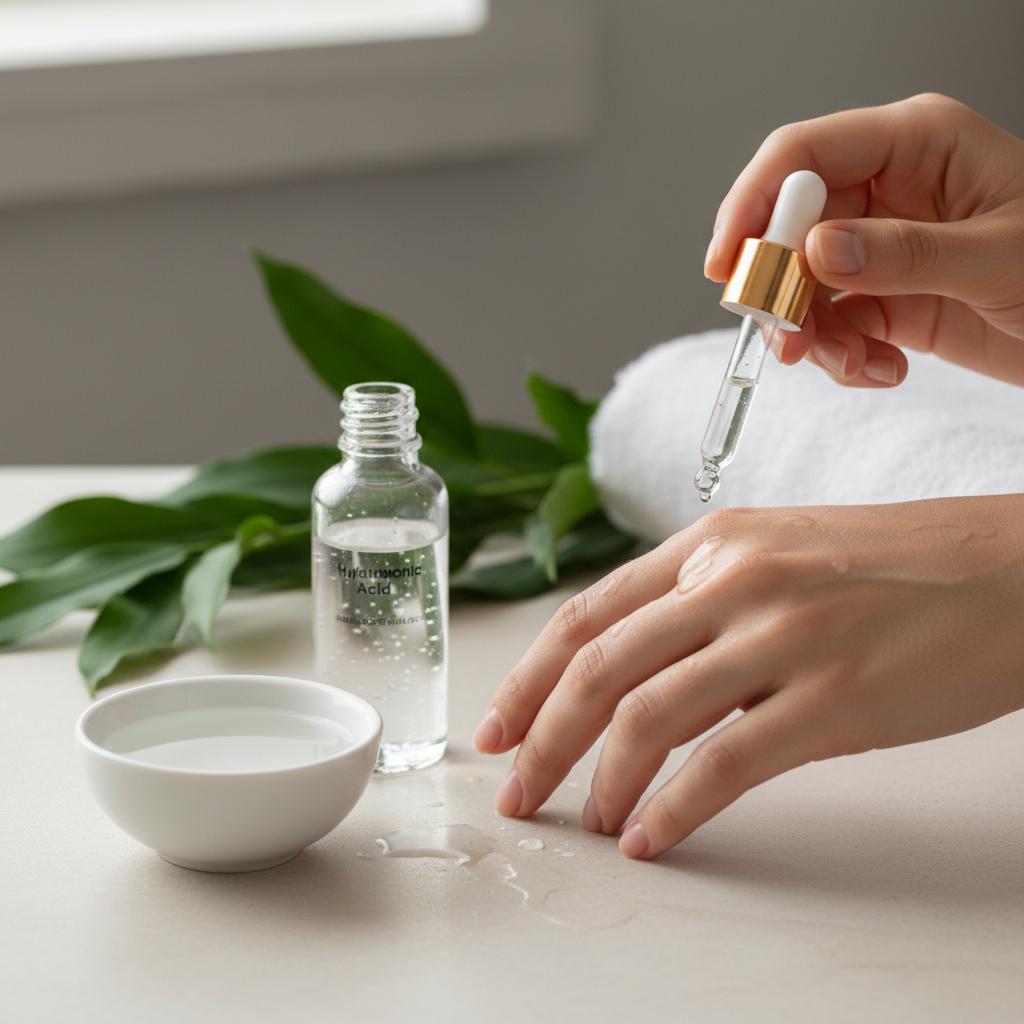
Do not wait long. The moment you pat your face dry, start your next step. Your skin should still feel slightly wet to the touch. If you wait more than one minute, the surface water evaporates. You lose your window. Keep your hyaluronic acid serum near the sink. That way, you can grab it fast. Speed matters here. The goal is to apply hyaluronic acid serum on damp skin before the dampness fades.
Using Mists or Splashes for Extra Dampness Before Hyaluronic Acid Serum
Sometimes your face dries too fast. That is okay. You can add water back. Use a facial mist with simple ingredients. Rose water or plain thermal spring water works well. You can also cup your hands under the tap and splash clean water on your face. Do not soak yourself. Just a light layer of moisture is enough. Then immediately apply hyaluronic acid serum on damp skin. This trick is great in dry rooms or on airplanes.
Step-by-Step: How to Apply Hyaluronic Acid Serum on Damp Skin Correctly
Now you are ready to apply the serum. Follow these steps carefully. Each one builds on the last.
Exactly How Many Drops of Hyaluronic Acid Serum to Use
Most people use too much. You only need three to four drops for your whole face. One drop goes on your forehead. One drop on each cheek. Half a drop on your nose and chin. That is enough. If your serum comes in a pump bottle, one full pump is usually perfect. Using more does not help. Extra serum sits on top of your skin and pills up. It also wastes product. Start small. You can always add one more drop if needed.
The Correct Pressing and Patting Technique for Hyaluronic Acid Serum
Do not rub the serum in. Rubbing creates friction and wastes product. Instead, press the serum into your damp skin. Use your fingertips. Pat gently across your forehead, cheeks, nose, and chin. Move from the center of your face outward. Use light, quick taps. Feel the serum grip the water on your skin. It should feel slightly tacky at first. That tackiness fades as the product absorbs. Pressing helps the serum sink into the outer layer of your skin where it belongs.
When to Layer Other Serums After Hyaluronic Acid Serum
Hyaluronic acid serum goes on first, right after cleansing. It is thin and water-based. Thicker serums come next. If you use niacinamide, vitamin C, or peptide serums, apply them after your hyaluronic acid serum. Wait about 30 seconds between layers. You do not need to wait until the skin is fully dry. Just let the tackiness reduce a bit. Then press the next serum on top. Always go from thinnest to thickest texture.
Sealing in Hydration After You Apply Hyaluronic Acid Serum
Hydration without a seal escapes fast. You must lock in the benefits of your hyaluronic acid serum with the right follow-up products.
Why Moisturizer Must Follow Hyaluronic Acid Serum on Damp Skin
Hyaluronic acid brings water into your skin. Moisturizer keeps it there. Without moisturizer, the water evaporates into the air. This process is called transepidermal water loss. It leaves your skin drier than before. A good moisturizer acts like a lid on a jar. It seals everything inside. Always apply moisturizer after you apply hyaluronic acid serum on damp skin. This step is not optional. It is essential.
Occlusives and Emollients: Locking in Hyaluronic Acid Serum Benefits
Look for moisturizers with two types of ingredients. Occlusives create a physical barrier. Examples are petrolatum, shea butter, and beeswax. Emollients soften the skin. Examples are ceramides, squalane, and fatty acids. Together, they trap the water that your hyaluronic acid serum pulled in. Your skin stays hydrated for hours. Pick a moisturizer that matches your skin type. Gel formulas work for oily skin. Creams work for dry skin.
Timing: How Soon to Moisturize After Hyaluronic Acid Serum
You have a short window. Apply your moisturizer within 60 seconds of your hyaluronic acid serum. The skin should still feel slightly damp and tacky. Do not let the serum dry down completely. If it dries, the water starts escaping. Move fast but stay gentle. Press the moisturizer into your skin with the same patting motion. Cover your whole face and neck. This locks in hydration at the perfect moment.
Common Mistakes When You Apply Hyaluronic Acid Serum on Damp Skin
Even with good intentions, mistakes happen. Here are the most common errors and how to fix them.
Applying Too Much Hyaluronic Acid Serum
More serum does not mean more hydration. Too much product creates a sticky film on your face. It can pill up when you add moisturizer or makeup. Pilling looks like little balls of product rolling off your skin. Stick to three or four drops. Spread them evenly. If your face feels too wet or sticky, you used too much. Dial it back next time. Your skin can only absorb so much at once.
Skipping Moisturizer After Hyaluronic Acid Serum
This is the biggest mistake. Without moisturizer, the water evaporates quickly. Your skin ends up tight and dry. You might feel like the serum does not work. The problem is not the serum. It is the missing seal. Always follow with moisturizer. This rule applies even if you have oily skin. Oily skin still loses water. A light gel moisturizer works well for oily types.
Using Hyaluronic Acid Serum in Dry Environments Without Extra Water
Dry air pulls moisture from everywhere, including your skin. If you live in a desert climate or sit in air-conditioned rooms all day, the air has little humidity. Your hyaluronic acid serum cannot pull water from the air if there is none. It will pull from your skin instead. Fight this by misting your face with water before you apply hyaluronic acid serum on damp skin. You can also use a humidifier in your room. Extra water in the air helps the serum work better.
Applying Hyaluronic Acid Serum Over Dry Skin and Feeling Tighter
If your skin feels tight after applying the serum, you applied it to dry skin. The serum pulled water from deep layers and brought it to the surface, where it evaporated. The fix is simple. Always start with damp skin. If you forget and feel tightness, mist water on your face and press it in gently. Then apply moisturizer right away. You can recover from this mistake in seconds.
Adapting Your Routine to Apply Hyaluronic Acid Serum on Damp Skin in Any Climate
Your environment changes how your skin behaves. Adjust your routine to match the weather and your surroundings.
How to Apply Hyaluronic Acid Serum Correctly in Winter or Heated Indoors
Winter air is dry. Indoor heating makes it worse. In these conditions, damp skin evaporates faster. You may need more water on your face before you apply hyaluronic acid serum on damp skin. Use a mist right before the serum. Follow with a thicker moisturizer that contains occlusives. You can also apply a thin layer of facial oil on top of your moisturizer at night. This extra seal keeps hydration locked in while you sleep.
Hyaluronic Acid Serum Routine for High Humidity vs. Low Humidity
In high humidity, the air has plenty of water. Your hyaluronic acid serum can pull moisture from the environment. You might not need as heavy a moisturizer. A light lotion is enough. In low humidity, the air is thirsty. It pulls water from your skin. You need more help. Layer a hydrating toner under your serum. Top with a rich moisturizer. The drier the air, the more you must seal everything in.
Travel and Gym Hacks for Correct Hyaluronic Acid Serum Application
Traveling means changing climates and dry airplane cabins. Pack a small facial mist in your bag. After cleansing at the airport or gym, mist your face. Apply hyaluronic acid serum on damp skin right away. Keep a travel-size moisturizer handy. At the gym, wash your face after your workout. Use the locker room sink. Splash water, apply serum, and seal with moisturizer. These small steps protect your skin from dry public spaces.
FAQ: Common Questions About How to Apply Hyaluronic Acid Serum on Damp Skin
You have questions. Here are clear answers to the most frequent ones.
Can I Apply Hyaluronic Acid Serum After Toner Instead of Water?
Yes. Toner works even better than plain water in some cases. Hydrating toners contain extra humectants like glycerin. They boost the effects of your hyaluronic acid serum. Pour a few drops of toner into your palms and press it into your skin. Do not let it dry. Then apply hyaluronic acid serum on damp skin immediately. Avoid toners with high amounts of alcohol. They dry the skin and defeat the purpose.
Should I Use Hyaluronic Acid Serum on Damp Skin with Retinol or Vitamin C?
Yes, but layer them correctly. Apply hyaluronic acid serum on damp skin first. Wait about 30 seconds. Then apply your vitamin C serum in the morning or retinol serum at night. The hyaluronic acid creates a hydrated base. It helps buffer stronger active ingredients and reduces irritation. Never mix retinol and vitamin C in the same routine. Use vitamin C in the morning and retinol at night.
Is It Safe to Apply Hyaluronic Acid Serum on Damp Skin Morning and Night?
Yes. Hyaluronic acid is very gentle. Your skin naturally produces it. Using it twice daily is safe for almost everyone. Morning application gives you plump skin under makeup. Night application helps your skin repair while you sleep. Just follow the same damp skin rule both times. Consistency gives the best results. Your skin hydration improves week after week.
How Do I Know If My Hyaluronic Acid Serum Application Is Incorrect?
Your skin will tell you. Signs of incorrect application include tightness after the serum dries, flaking skin later in the day, or a sticky film that pills up. Your skin might look dull instead of glowing. If any of these happen, check your routine. Is your skin damp enough? Did you seal with moisturizer? Did you use too much product? Adjust one thing at a time until your skin feels comfortable and looks hydrated.
Final Tips to Perfect How You Apply Hyaluronic Acid Serum on Damp Skin
You now know the science and the steps. Here is a quick summary to lock it in your memory. Always start with clean skin. Keep the surface damp with water or toner. Use only three to four drops of serum. Press and pat it in gently. Seal it within 60 seconds using a good moisturizer. Adjust your routine for dry or humid weather. Avoid common mistakes like skipping moisturizer or using too much product.
Your skin deserves care that actually works. When you apply hyaluronic acid serum on damp skin correctly, you give your skin what it needs to stay plump, soft, and healthy. This method takes less than two minutes. It costs nothing extra. The payoff is skin that looks and feels better every single day. Start tonight. Your skin will thank you in the morning.