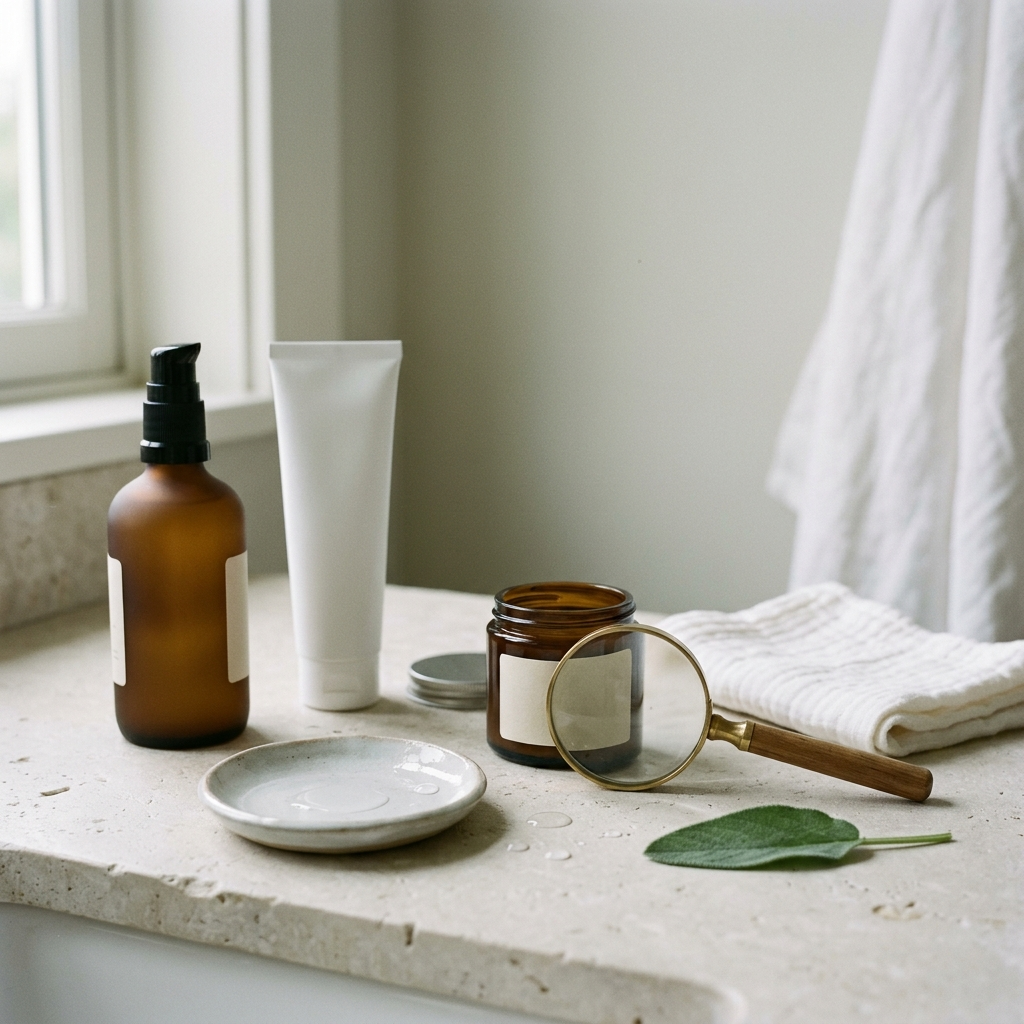
Your face wash touches your skin every day. For sensitive skin, that daily contact matters a lot. A harsh cleanser can leave your face red, tight, or itchy. The good news is that the label tells you almost everything you need to know. You just have to learn the code. This guide shows you how to read cleanser ingredient labels for sensitive skin, step by step. No science degree needed.
Why Reading Cleanser Ingredient Labels Matters for Sensitive Skin
Sensitive skin reacts faster than normal skin. Dermatologists define it as skin that shows irritant or allergic reactions more easily than the average person. That higher reactivity can come from a weaker skin barrier, a stronger immune response, or more sensitive nerve signals 来源. In short, your skin has less room for error. A label is your best defense.
How a Cleanser’s Ingredients Trigger Irritation
Cleansers work by lifting oil, dirt, and dead cells off your skin. The ingredients that do this are called surfactants. Some surfactants are gentle. Others strip away your skin’s natural oils and proteins. When that happens, your barrier weakens. Water escapes, irritants get in, and you feel burning or tightness. Fragrance and harsh preservatives can also trigger irritation or allergy.
Rinse-Off vs. Leave-On: Why Cleansers Follow Different Rules
Cleansers are rinse-off products. You wash them off in seconds. Leave-on products like serums and creams sit on your skin for hours. Because rinse-off contact is short, small amounts of an allergen are less risky. For example, fragrance allergens must be listed at 0.01% in rinse-off products but at 0.001% in leave-on products in the EU 来源. Still, sensitive skin can react to cleansers too. So read carefully.
What “Sensitive Skin” Labels Really Mean (and Don’t Mean)
Here is the surprise: “for sensitive skin” has no federal standard in the U.S. The FDA says there is no official definition that governs these words 来源. It is mostly a marketing term 来源. The FDA instead tells shoppers to read the actual ingredient list. So the label front is a suggestion. The ingredient panel is the truth.
The Golden Rules of How to Read Cleanser Ingredient Labels
Four rules unlock every cleanser label. Learn them once and you will use them forever.
Rule 1 – Ingredients Are Listed in Descending Order by Concentration
Ingredients appear from most to least. The first item is the biggest part of the formula. Usually that is water, listed as “water” or “aqua.” The FDA requires this descending order 来源. So the top of the list shows what really fills the bottle.
Rule 2 – The First 5 Ingredients Define Your Cleanser
Look at the first five names. They make up most of the product. If a harsh sulfate is number two, that cleanser is probably strong. If glycerin and a gentle surfactant sit up top, you are likely in safer territory. Train your eyes to land on the top five first.
Rule 3 – Everything After the 1% Line Is Mostly Marketing
Once an ingredient is at 1% or less, the order no longer matters. Manufacturers may list those items in any order 来源. That means a fancy “hero” plant extract near the end could be a tiny amount. It may exist just to look good on the label.
Rule 4 – INCI Names Aren’t the Enemy
INCI stands for International Nomenclature of Cosmetic Ingredients. It is a shared naming system used worldwide. So “sodium cocoyl glycinate” is not a scary chemical. It is simply a gentle cleanser. Long names just describe the molecule in a standard way. Learn a few INCI names and the list becomes readable.
How to Read Cleanser Ingredient Labels: A 5-Step Walkthrough
Step 1 – Locate the Surfactants (The Heart of Any Cleanser)
Find the cleansing ingredients. These are the surfactants. Look for names like cocamidopropyl betaine, sodium cocoyl isethionate, or coco-glucoside. Circle them. These decide how gentle or harsh the wash will feel.
Step 2 – Scan for Fragrance, Parfum, and Essential Oils
Search the list for the words “fragrance,” “parfum,” “aroma,” or “essential oil.” Fragrance is one of the most common causes of contact dermatitis from cosmetics 来源. If you see it high on the list, put the bottle down. Note that “fragrance” can hide many unnamed chemicals.
Step 3 – Check the Alcohols and Preservatives
Now look for drying alcohols. Names to watch: ethanol, alcohol denat., and isopropyl alcohol. These can strip your barrier over time 来源. Then check preservatives. Every water-based cleanser needs them to stay safe. The key is the type and amount, not the word itself.
Step 4 – Look for Barrier-Supporting Ingredients
Gentle cleansers often add helpful extras. Look for ceramides, glycerin, panthenol, or cholesterol. These support your skin barrier and add moisture. Finding them is a good sign for sensitive skin.
Step 5 – Confirm the Cleanser’s pH and Formulation Type
Check the product page or brand site for the pH. A mild cleanser should sit at an acidic to neutral pH. That keeps your skin’s own acid mantle steady 来源. Also note the type: cream, gel, foam, or oil. Cream and gel cleansers often suit sensitive skin well. Strong soap bars tend to be more alkaline and harsher.
Decoding Surfactants: The Most Important Cleanser Ingredients for Sensitive Skin
Surfactants are where the action happens. Getting this part right does most of the work.
Harsh Anionic Surfactants to Watch For (Sulfates)
Anionic surfactants carry a negative charge and clean powerfully. But some are too strong. Watch for sodium lauryl sulfate (SLS) and ammonium lauryl sulfate. They can leave skin tight and dry. Good news: a product can call itself “sensitive skin” and still contain strong cleansers. That is why you read the list, not the front label.
Gentle Amphoteric and Nonionic Surfactants to Favor
Amphoteric surfactants are milder and often used in gentle formulas. A common example is cocamidopropyl betaine. Nonionic surfactants are also mild. They may appear as polysorbates or glucosides. These are good names to find in the top five.
Glucoside and Amino Acid Cleansers Explained
Two gentle families deserve a special mention. Glucosides are sugar-based cleansers. Look for names ending in “-glucoside,” like decyl glucoside or coco-glucoside. Amino acid cleansers are built from amino acids. Look for “cocoyl glycinate,” “cocoyl glutamate,” or “sodium methyl cocoyl taurate.” Both families tend to clean without stripping 来源.
“Sulfate-Free” vs “Soap-Free”: What the Claims Hide
“Sulfate-free” only means no sulfate surfactants. The formula may still use other strong cleansers. “Soap-free” means it does not use traditional soap, which is usually alkaline. It might still contain a harsh detergent. Neither phrase promises a gentle wash. Always read the actual surfactants.
Cleanser Ingredients to Avoid for Sensitive Skin
Sensitive skin does well when you cut known irritants. Here are the main ones to watch.
Fragrance and Parfum in Cleansers
Fragrance tops the list of cosmetic allergens. It can appear as “fragrance,” “parfum,” or “aroma.” Because the word is vague, it may hide dozens of chemicals. For reactive skin, fragrance-free is the smart default 来源.
Drying Alcohols (Ethanol, Denatured Alcohol, Isopropyl Alcohol)
These alcohols help products feel light and dry fast. But near the top of a list, they can pull moisture from your skin 来源. Over time that weakens your barrier. If you see them early in the list, be cautious.
Harsh Preservatives and Common Contact Allergens
Preservatives keep cleansers free of mold and bacteria. That is a good thing. But a few can irritate sensitive skin. Names sometimes flagged include methylisothiazolinone and methylchloroisothiazolinone. If you have reacted before, check with a dermatologist before using them.
Exfoliating Acids and Scrubs in Daily Cleansers
Glycolic acid, lactic acid, and salicylic acid can smooth skin. But in a daily wash on a weak barrier, they may cause mild irritation and extra sun sensitivity 来源. Physical scrubs with beads or shells can also scratch. For a compromised barrier, keep exfoliation separate and gentle.
Essential Oils and Botanical Extracts That Irritate
Natural does not mean gentle. Tea tree, lavender, peppermint, and citrus oils can irritate or make skin sun-sensitive. Even soothing-looking plant extracts can trigger allergies in some people. Fewer plant ingredients often means fewer chances of a reaction 来源.
Cleanser Ingredients to Look For When You Have Sensitive Skin
Now the positive side. These ingredients work with your skin, not against it.
Barrier-Repairing Ceramides, Cholesterol, and Fatty Acids
Ceramides, cholesterol, and fatty acids are natural parts of your skin barrier. They fill the gaps between skin cells and hold in moisture. Skin with fewer ceramides tends to feel dry and reactive. The best formulas pair several ceramide types with cholesterol and fatty acids 来源.
Soothing Humectants Like Glycerin and Panthenol
Humectants pull water into your skin. Glycerin and panthenol are two gentle stars. Hyaluronic acid counts too. Even in a rinse-off cleanser, these can leave skin feeling soft instead of tight 来源.
Gentle Actives: Niacinamide, Peptides, and Colloidal Oatmeal
Some actives help calm and support sensitive skin. Niacinamide can support the barrier. Peptides are gentle and well tolerated. Colloidal oatmeal and chamomile have soothing, anti-inflammatory effects 来源. Keep amounts small in a cleanser, though. Short contact limits the benefit.
Fatty Alcohols vs Drying Alcohols: How to Tell Them Apart
Not all “alcohols” are bad. Drying alcohols are short chains like ethanol and isopropyl alcohol. Fatty alcohols are different. Names like cetearyl alcohol and stearyl alcohol are waxy and actually soften skin 来源. So do not panic when you read the word “alcohol.” Check which kind it is.
Red Flags and Marketing Traps on Cleanser Labels
Labels sell as much as they inform. Learn the traps so you are not fooled.
“Natural,” “Clean,” and “Non-Toxic” Are Unregulated
These words sound reassuring. But the FDA does not regulate or define them 来源. A “clean” product can still contain a strong surfactant. A “natural” one can still cause an allergy.
“Hypoallergenic” and “Dermatologist-Tested” Explained
“Hypoallergenic” means the product is less likely to cause allergy. But no strict rules define what qualifies. “Dermatologist-tested” only means a dermatologist was involved somewhere. The extent of that testing is rarely shared 来源. These claims are hints, not guarantees.
“Fragrance-Free” vs “Unscented”: A Critical Difference
This one trips up many people. “Unscented” often means the product hides a masking fragrance so it has no smell. A masking scent can still irritate. “Fragrance-free” means no fragrance was added. For sensitive skin, choose “fragrance-free.” Remember, the FDA gives no official definition for these terms either 来源.
Greenwashing and Hidden Fragrance Loopholes
Greenwashing uses eco-friendly words to suggest a product is gentler. It rarely means safer for your skin. A bigger loophole: you can name a plant or essential oil instead of the word “fragrance.” The plant may still be a fragrance allergen. So a list can look fragrance-free while still containing scent chemicals 来源.
How to Patch Test a New Cleanser for Sensitive Skin
Even a careful choice can surprise you. Patch testing catches problems early.
Where and How to Patch Test
Use a small area first. Try the inner forearm or behind the ear. Wash that spot with a little cleanser and rinse. Repeat once a day for two to three days. Do not test on your face the very first time.
Reading Your Skin’s Reaction
Watch for redness, itching, burning, or bumps. Mild tingling can be normal for a moment. Lasting discomfort is not. Check the spot before you wash and after. Take a photo if that helps you track changes.
When to Stop Using a Cleanser
Stop right away if you see swelling, ongoing redness, or a rash. Rinse with cool water. Do not layer other new products on top. If a reaction does not settle quickly, contact a doctor or dermatologist. Your skin’s comfort always comes first.
Tools and Resources for Reading Cleanser Ingredient Labels
You do not need a lab coat. A few smart tools make labels easier to read.
Ingredient Decoder Databases and Apps
Free online databases let you look up an INCI name in seconds. Many show what each ingredient does and its usual purpose. Use them to double-check any name you do not know. Just remember: a database explains ingredients, but your own skin is the real judge.
How to Cross-Check INCI Names
If a name confuses you, search it along with the word “INCI.” You will often find its plain-language name and function. Cross-check on more than one site. This helps you spot hype versus fact.
When to Ask a Dermatologist
See a dermatologist if reactions keep happening. You may have a specific allergy that patch testing can find. A doctor can also help if you have rosacea, eczema, or acne with sensitive skin. In those cases, gentle cleansing and correct product choice matter even more 来源.
FAQ: Common Questions About Reading Cleanser Ingredient Labels for Sensitive Skin
Does a Shorter Ingredient List Always Mean a Gentler Cleanser?
No, but it often helps. Fewer ingredients mean fewer chances of a reaction. Sensitive skin usually does better with simpler formulas. Still, a short list can still hide one harsh cleanser. Always check the top five names.
Are Sulfates Always Bad for Sensitive Skin?
Not always, but they are risky. Strong sulfates like sodium lauryl sulfate can strip the barrier. Many sensitive-skin cleansers skip them for good reason. If your skin stays calm, a sulfate is not automatically wrong. Let your skin decide.
Is “Fragrance-Free” Cleanser Safe for Everyone With Sensitive Skin?
Not for everyone. Fragrance is a common trigger, but other ingredients can still irritate. Preservatives, essential oils, and strong surfactants may also be a problem. “Fragrance-free” removes one big risk, not every risk.
How Do I Know If a Cleanser’s pH Is Right for My Skin?
Look for a stated pH on the brand site or product page. A mild cleanser should be acidic to neutral. That matches your skin’s natural acid balance and causes less disruption 来源. If there is no pH info, choose a gentle, soap-free formula instead.
Conclusion: Master Your Cleanser Labels for Calmer, Happier Skin
Reading cleanser ingredient labels is a skill. Like any skill, it gets easier with practice. Start with the first five ingredients. Find the surfactants. Scan for fragrance and drying alcohols. Look for ceramides, glycerin, and gentle cleanser names. Then patch test before you commit.
One last reminder: skin health is personal. What calms one person may irritate another. The label gives you clues. Your own skin gives you the answer.
Your next step is simple. Pick one cleanser on your shelf. Read its label with these four golden rules in hand. Circle the surfactant and the first five ingredients. You will already see your routine more clearly.